
by Wonsuh Song
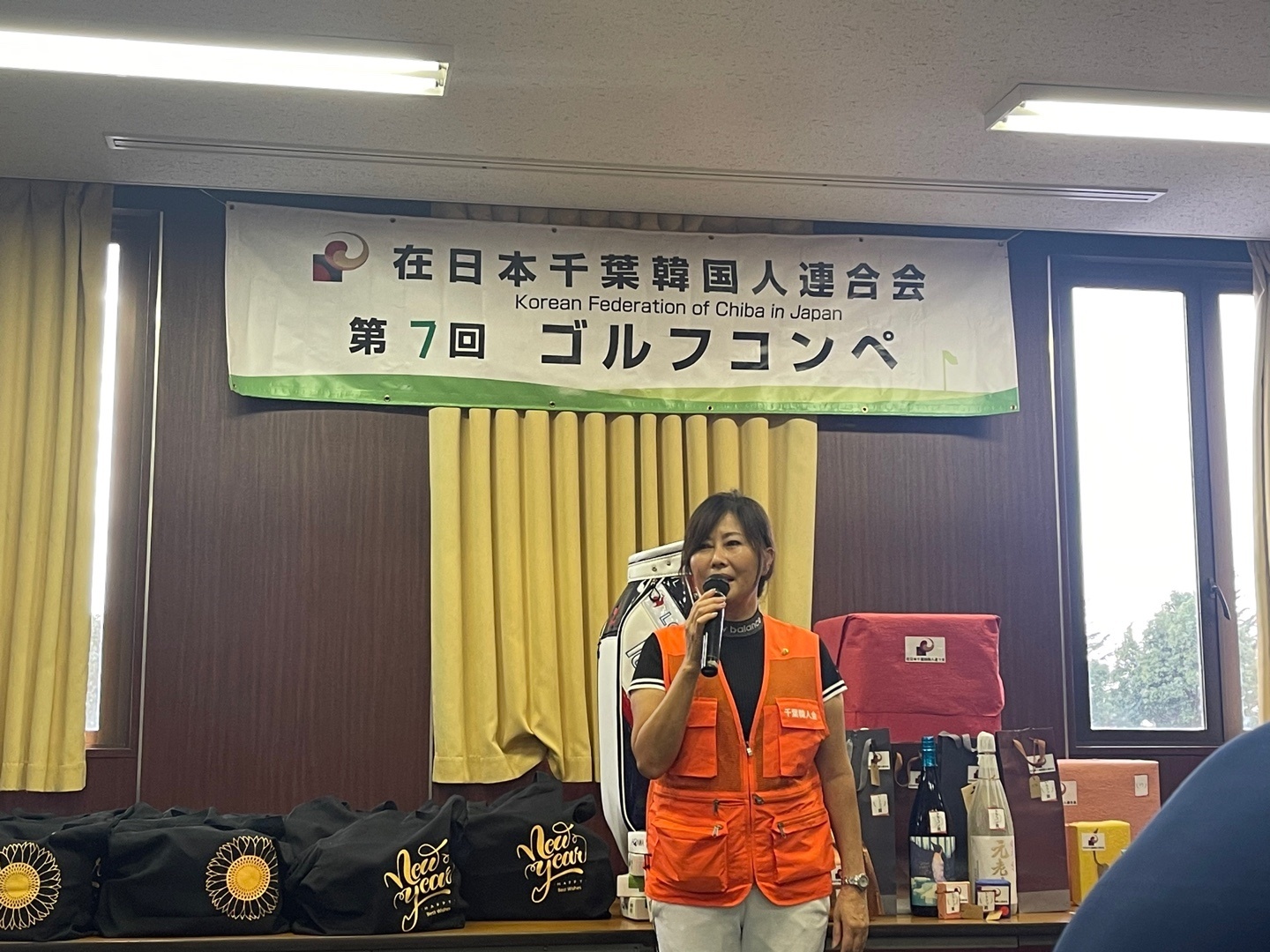
Nestled in a quiet residential area of Chiba, Japan, you’ll find a garden that looks as though it belongs in a fairy tale. A small pond teeming with koi, lush green trees all around, and large glass windows letting in rays of sunlight, through which people bustle about. Standing at the heart of it all is Ms. Yang Miyoung, President of Korean Federation of Chiba in Japan. Beneath her bright smile lies a story of many twists and turns, one which we set out to hear firsthand.
“November 13, 1986: Arriving in Narita”
When Ms. Yang Miyoung began speaking, the first thing she said was:
“I can never forget the date I first arrived in Japan—November 13, 1986.
The memories of what happened then are still very vivid to me.”
Soon after she landed on Japanese soil, she encountered a terrifying ordeal: she was kidnapped on her way to Matsudo and held for 15 days. She spoke no Japanese and had no one to rely on. Her life in Japan began under this cloud of intense anxiety and fear.
“I’d like to forget about that experience, but if I erased those days, it would be like losing half of my past.”
After narrowly escaping the kidnapping, she enrolled in a Japanese language school in Shibuya. However, in those days, one could only obtain a one-year short-term passport, forcing her to travel back and forth between Korea and Japan. During that tumultuous period, an unexpected offer came her way: “Why don’t you try singing?” Supported by a cosmetics company president who sponsored her lessons, she trained in vocal performance and eventually debuted under King Records. While it wasn’t a Cinderella story where she became an overnight star, her path was anything but ordinary.

“Meeting My Husband Was Also Like a Movie”
Around the time she began promotional activities and producing her album, a man persistently asked her out for coffee for six straight months. They spoke different languages, yet his words—“If I don’t see you today, I might never see you again—please just one cup of coffee”—resonated with her.
“That man is now my husband. He says he’ll write a book about why he pursued me so relentlessly, so I’ll leave the detailed story to him. In truth, there’s a lot I can’t openly share, but there was a time when we literally had to run away together, almost like eloping.”
Family disapproval, unexpected trouble, and various obstacles all converged against them. She discovered she was pregnant and managed to visit her hometown for the first time in four years with their 7-month-old baby. Financial hardship persisted, but her husband was determined, saying, “I want to make you the most successful woman in Japan,” and threw himself into work. Meanwhile, Ms. Yang Miyoung took care of her mother-in-law, opened her home to runaway teens, and devoted herself tirelessly to her family and those around her. For over two decades, she lived solely as a homemaker, pouring everything into her household and child. In time, she developed a fear of socializing—anxiety so deep that she almost lost touch with the outside world.
“Stepping Outside and Finding the Korean Federation of Chiba in Japan”
She began running a shop at a golf training facility, gradually venturing out of her isolation. Through golf tournaments, she came across the existence of the Korean Federation. It sounded intriguing, but she had no concrete knowledge of the group. Then one day, at a golf event in Tokyo, an acquaintance introduced her to the association and essentially appointed her “Senior Vice President”. She had no idea what such a title meant.
“Someone handed me a business card that said ‘Senior Vice President.’ I thought, ‘What does that even mean? What am I supposed to do?’ Then, before I knew it, there was a rumor that ‘the next president will be Yang Miyoung.’”
Sure enough, once she became the actual president, the workload proved far greater and more complex than she ever imagined. Recruiting members, organizing events for the local Korean community, and engaging with other organizations kept her constantly on the move. Initially, some people worried, “With a woman president, isn’t it going to be difficult—especially in Japan’s male-dominated culture?” Yet she pressed on, determined to raise the profile of the Chiba Korean Association and build a group where people help each other through volunteer work.
“Bridging Japan and Korea Through Food—Chijimi and Kimchi”
Ms. Yang’s motto is simple: “First, move. And then unite people through food.” Indeed, two hallmark activities the Korean Federation of Chiba conducts are teaching people how to make Chijimi (Korean pancakes) and hosting a large Kimchi-making event. They invite Japanese locals to join in making Korean dishes, sharing each other’s cultures in a friendly setting. One of the most notable projects is their Kimchi event, where they spend two full days preparing nearly 300 heads of cabbage, sampling fresh Kimchi and Kkakdugi (cubed radish kimchi) on the spot.
“Some Japanese folks are still so unfamiliar with Korea that they ask, ‘Do you have strawberries in Korea?’ So I explain things one by one, and at the same time learn about Japanese culture, too. That, I think, is genuine exchange.”
While it demands significant labor and expense, the kimchi they make is donated to local residents, community centers, or welfare facilities. In turn, the group has earned recognition and support from the ward office and local organizations—something the president takes great pride in.

“Connecting People—That’s Why Our Federation Exists”
The Korean Federation of Chiba, as Ms. Yang describes it, is “still just getting started.” She admits that at times, she feels overwhelmed by how much there is to do. Yet recalling the many hardships she has overcome in the past, she says, “This much, at least, I can manage.” More importantly, she’s backed by a team of board members and volunteers who stand by her. Some who once questioned her decision to lead have now rolled up their sleeves in the kitchen or taken the reins in organizing events, each playing an active role.
“Honestly, I’ve collapsed from exhaustion twice—physically and mentally—since taking on this role. But I’d remind myself, ‘If I already accepted this job, I can’t disappoint the people who came here to help.’ Over time, everyone pitched in, and now it feels like we’ve become a family.”
When asked what the association means to her, Ms. Yang replies, “At first, I just wanted to meet nice people. But now, I love that we’ve banded together to do good for society, and that we can rely on each other. It’s become a space for solidarity.”

“I Want to Extend My Hand to Even More People”
Whenever she reflects on her past, Ms. Yang laughs wryly and says, “It’s embarrassing—it’s been so long; it sounds outdated, doesn’t it?” Yet the reality is that her day-to-day struggles and fierce determination to survive shaped a life story that few could replicate.
Looking ahead, the Korean Federation of Chiba hopes to further strengthen ties between Japan and Korea—introducing Korean culture to local residents while fostering greater unity among Korean residents. “I believe all these small efforts build up, helping both sides understand and respect each other’s cultures,” she says, a statement that encapsulates all her passion.
Decades ago, her life in an unfamiliar Japan began with a kidnapping incident, and now she has become a bridge linking the two countries. Day after day, she extends a hand to those in need, cheerfully quipping, “If we need more pancakes, let’s just make more. If we need more kimchi, we can always make more!” Even in hardship, she wears a bright smile and insists, “Let me take the first step—with joy.” The ups and downs of her life have forged her strength, evolving into boundless energy that embraces others.
“Advice for Newcomers Living in Japan”
Having shared her dramatic experiences, Ms. Yang’s voice falls surprisingly calm. For those who are just setting foot in Japan or grappling with adjustment—so-called “newcomers”—she offers a few words of advice:
“You can’t simply bring your Korean habits and personality as-is and expect them to work in Japan.
You need to take a step back, lower your guard, and listen to the people here.
Even if it takes time, just by bowing and offering small greetings,
you can eventually build a powerful connection with Japanese people.”
The key, she emphasizes, is acknowledging that people come from different cultures and having the humility to learn. Instead of pushing one’s own accomplishments or forcing Korean ways on others, she suggests lowering your voice and greeting with a smile as far more effective.
“If you keep saying, ‘But in Korea I could do so much more,’ your pride might just build a wall here.
Yes, it can be tough, but if you first try to understand them,
Japanese people will open their hearts and give you even greater respect in return.”
She speaks from over 30 years of lived experience in Japan, having overcome repeated setbacks to discover what truly works. “I can say this because I’ve walked that road, and I’ve survived,” she notes with a laugh. It’s never easy to settle in a foreign land with its own culture, but she insists, “Bowing your head is never a sign of defeat.”
by Wonsuh Song



댓글 남기기