by Wonsuh Song (NKNGO Forum)
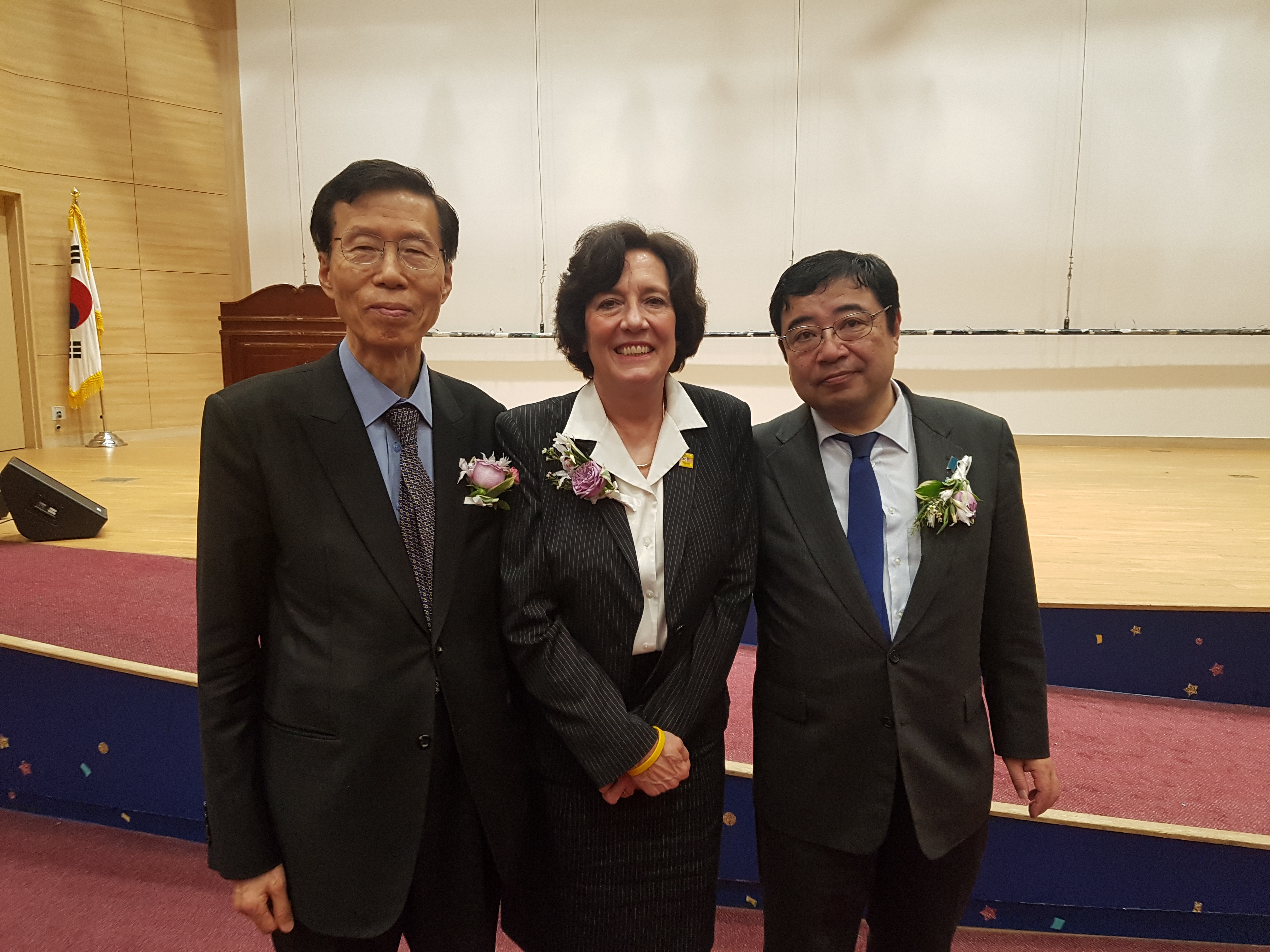
North Korea’s abduction of Japanese citizens remains a pressing issue, with the “Sukuukai” (National Association for the Rescue of Japanese Kidnapped by North Korea) striving for an early resolution by supporting the families of those abducted and sharing information with the international community. Tsutomu Nishioka, who serves as the chairman of Sukuukai, is known not only for his expertise in Korean and North Korean regional studies but also for his active engagement on the front lines of civil society.
In a recent written interview, I asked Chairman Nishioka about his initial involvement in North Korean affairs, his perspectives on the abduction issue and nuclear missile threats, and how he envisions possible paths toward resolving these challenges. Below is a synthesis of our exchange, along with my own observations.
Background to Nishioka’s Involvement in the Abduction Issue
Nishioka’s deep commitment to North Korean issues began in earnest around 1997, when the abduction of Megumi Yokota by North Korea first gained widespread public attention. Around that time, the victim’s family established the “Family Association,” and volunteers formed Sukuukai to support them. Nishioka became one of its founding members, which catapulted him into the heart of efforts to address North Korea’s abductions.
He originally majored in Korean and North Korean studies, graduating from International Christian University and completing his master’s at the Graduate School of Area Studies at the University of Tsukuba. He also studied at Yonsei University in South Korea, served as a Special Researcher at the Japanese Embassy in Seoul, worked as Editor-in-Chief of the magazine Gendai Korea, and later taught at Tokyo Christian University. Currently, he is a Specially Appointed Professor at Reitaku University, while also serving as a Professor and Director of the History Research Department at the Moralogy Moral Education Foundation’s Institute for Moral Science, and as President of the Society for the Study of History Issues. Through these multifaceted roles—both as a scholar and an activist—Chairman Nishioka has devoted himself to resolving the abduction issue.

The Kim Jong-un Regime and the Future of the Hereditary System
In Chairman Nishioka’s assessment, the greatest threat to Kim Jong-un’s regime is the growing awareness among North Korean citizens of South Korea’s economic prosperity and personal freedoms. For over 20 years, efforts by defectors and human rights activists—through radio broadcasts, balloon-distributed leaflets, and other channels—have steadily increased the inflow of external information into North Korea, weakening the regime’s tight control over what its people learn about the outside world.
This phenomenon appears to have forced Kim Jong-un into a precarious position. According to Nishioka, Kim has recently made remarks that seem partially critical or dismissive of his grandfather Kim Il-sung and father Kim Jong-il—an unprecedented move that breaks from the conventional practice of absolute reverence for his forebears. If true, it signals a dilemma in which the current leader must distance himself from previous leadership to preserve his own grip on power. Such a move could weaken the legitimacy of the three-generation hereditary rule, suggesting a potential fragility that looms over the regime’s future.
Prospects for Normalizing Relations Between Japan and North Korea
From Nishioka’s perspective, resolving both the abduction issue and the nuclear missile threat is a prerequisite to any normalization of diplomatic ties between Japan and North Korea. The abduction issue, in particular, holds immense importance in Japan, and public opinion strongly supports the principle that no formal diplomatic relationship should be established without the safe return of all abductees.
The urgency is further underscored by the advancing ages of the abductees’ parents. Chairman Nishioka stresses that achieving a comprehensive repatriation while the parents remain alive is an absolute priority. Absent that, Japan has no basis, in his view, to lift sanctions, provide humanitarian aid, or extend economic cooperation—even if bilateral relations were to be nominally normalized.
Internal Changes in North Korea and the Potential for Korean Unification
Chairman Nishioka believes that changes within North Korea could pave the way for unification under a free and democratic framework led by South Korea. He sees the growing disillusionment with the Kim dynasty as a “historic opportunity” for the North Korean people to push for systemic transformation. However, he also points out that South Korea’s domestic political upheavals and the lack of a coherent vision for unification have so far undermined the ability to capitalize on this momentum.
He advocates for “free unification” under the leadership of South Korea, arguing that such a path would improve human rights in the North and enhance peace and stability throughout East Asia. For that to happen, Nishioka maintains, both Japan and South Korea must look beyond their longstanding historical disputes and instead place priority on the 1965 treaty and agreements, which declared outstanding issues “completely and finally settled.” By doing so, the two nations could move toward future-oriented collaboration, including coordinated support for human rights groups and North Korean defectors who play a vital role in transmitting accurate information into the North.
The Post-Trump Era and Its Impact on the Abduction Issue
A change in the U.S. administration inevitably influences the climate around North Korea, especially concerning international sanctions and the nuclear missile negotiations. During the Trump presidency, there were periods of intense pressure on the North, which, while not definitively resolving the abduction issue, served to reaffirm the global determination against North Korea’s nuclear ambitions.
According to Chariman Nishioka, maintaining strong ties with the United States and consistently coupling the abduction issue with nuclear and missile discussions are critical. International coordination must spotlight all these concerns as a package, thereby sustaining pressure on Pyongyang to address them comprehensively.
The Future of “Sukuukai” and the Importance of International Cooperation
On February 16, 2023, Sukuukai announced updated action plans, reiterating the goal of realizing the immediate and collective return of all abductees. With the families of abductees getting older, the organization emphasizes that time is of the essence. It aims to amplify its public awareness campaigns in Japan, particularly among the younger generation, and to keep pressing governments and institutions worldwide to recognize North Korea’s systematic human rights violations.
Nishioka argues that external pressure and steady information flows into North Korea are indispensable for nudging the regime toward a breakthrough. The longer the issue drags on, the greater the risk of public interest waning, which is why Sukuukai actively seeks international alliances and platforms such as the United Nations to push for decisive action.
Conclusion
This written interview illuminates how, despite North Korea’s evolving internal landscape, close collaboration among the international community remains more critical than ever in addressing both the abduction issue and the broader goal of Korean unification. As Nishioka points out, ongoing political friction within South Korea and lingering tensions in Japan–South Korea relations could squander a rare opportunity created by growing awareness among North Koreans about life beyond their borders.
Cooperation between Japan and South Korea—each bringing distinct but complementary priorities—will be a key factor in effectively preparing for any sudden shifts in the North Korean regime. Japan insists that any normalization of ties must hinge on the unconditional return of all abductees, while South Korea must craft and champion a compelling vision for a unified, free Korean Peninsula. Joint efforts on these fronts could significantly alter the power dynamics in Northeast Asia and set the stage for transformative change in North Korea.
Far from being an outdated or distant issue, North Korea’s human rights abuses and military threats remain as urgent and complex as ever. Observing the initiatives of Sukuukai and paying attention to Nishioka’s analysis may offer valuable clues for anyone seeking tangible progress. If sustained and collaborative action materializes—across governments, international bodies, and civil society—it could well be the catalyst that propels the abduction issue and the prospect of free unification toward a long-overdue resolution.
Wonsuh Song
NKNGO Forum






댓글 남기기