

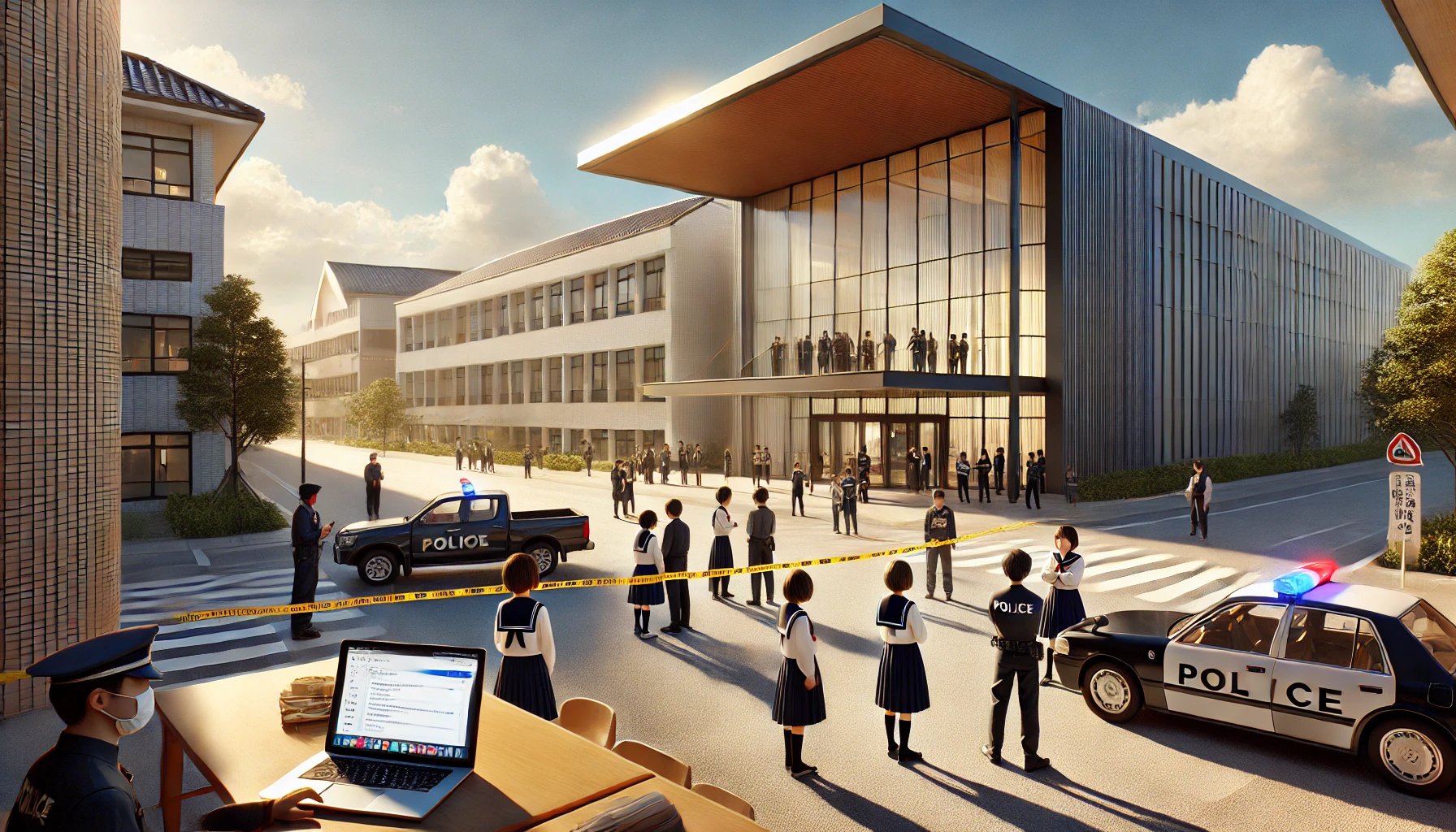
I recall a shocking incident from a few years ago when my children’s school received a kidnapping threat via email. The school, understandably alarmed, sent an urgent email to all parents stating, “We have received a threat. If you are concerned, please come and pick up your children.” As a parent, I was deeply unsettled and rushed to the school immediately, as did many other parents who were overwhelmed with fear and confusion.
Unfortunately, this was not an isolated incident. Similar threats continued to target the school, and recently, I heard that other schools and nearby junior high and high schools in Tokyo also received bomb threat emails. These schools had to respond by sending students home early and contacting parents, leading to widespread disruption. Even at the university where I work, a bomb threat fax(!) was received, prompting a campus-wide notice advising students and staff to refrain from unnecessary outings. Similar threats have reportedly been sent to other universities, with police investigations ongoing.
Japan, often regarded as one of the safest countries in the world, finds itself particularly vulnerable to the ripple effects of such “threat emails” or “faxed threats.” The public’s reaction to these incidents has been one of profound fear and anxiety, giving the perpetrators precisely what they seek: the amplification of societal fear. These threats impose significant psychological burdens on students, parents, and educational institutions, disrupting everyday life and operations.
The current situation is reminiscent of the fable of “The Boy Who Cried Wolf.” Repeated false threats can desensitize people to danger, causing them to underestimate real threats when they finally occur. Such actions, therefore, go beyond mere pranks—they are a direct assault on societal trust and safety, making them a grave crime.
One troubling aspect of this issue is the apparent inability to apprehend the perpetrators, allowing similar crimes to recur over the years. This prolonged state of uncertainty and fear weighs heavily on both the institutions and the broader community. It raises an urgent question: how should society address and prevent these crimes effectively?
Educational institutions, in particular, need robust crisis management protocols to respond swiftly and appropriately to such situations. Clear communication channels between schools, law enforcement, and the community are essential to ensure timely sharing of information and coordinated responses. Additionally, efforts must be made to differentiate false threats from genuine ones and to minimize the spread of fear while taking all threats seriously.
This issue has become a major concern in Japan. From schools to universities and public institutions, no target seems immune to these threats. The resulting anxiety and uncertainty permeate society, making it imperative for everyone to consider how best to maintain calm and address these challenges proactively.
Addressing this problem requires a collective effort. Beyond identifying and prosecuting the perpetrators, it is crucial to establish systems that prevent such incidents from disrupting society. Ensuring that false threats do not create unnecessary chaos while maintaining vigilance against real dangers must be our shared goal.
The recent wave of threat emails in Japan underscores the importance of readiness and resilience in the face of such challenges. In a society where safety is often taken for granted, these incidents serve as a stark reminder of the need for vigilance and systematic preparedness. It is time for us all—educators, institutions, and citizens alike—to work together to ensure that fear does not take control of our society.
Wonsuh Song (Ph.D.)
Full-time Lecturer, Faculty of School Teacher Education, Shumei University
Visiting Researcher, Center for Spatial Information Science, University of Tokyo
Adjunct Lecturer, Faculty of Education, Waseda University

















댓글 남기기