By Wonsuh Song
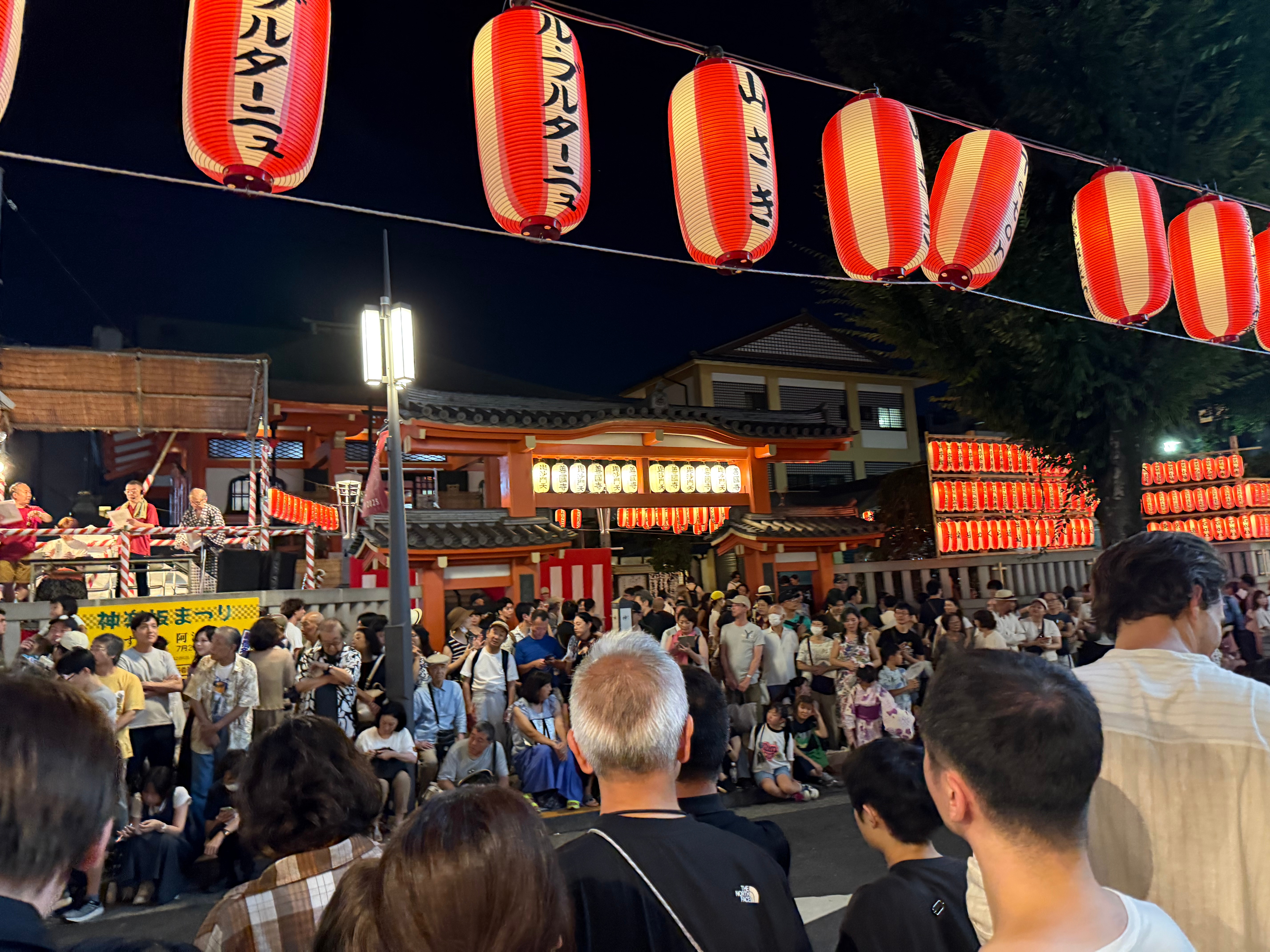
On the final weekend of July, Tokyo transformed into one massive festival ground. From the Sumida River fireworks to celebrations in Hachioji, Kagurazaka, Ebisu, Shinjuku, Marunouchi, and Haneda—more than seven major traditional events unfolded across the city in just one day. It was as if Tokyo itself declared, “This is the peak of summer.”
The Sumida River Fireworks Festival, one of the largest in Japan, drew over a million spectators to witness 20,000 fireworks light up the night sky. In Hachioji, 4,000 fireworks created a more local but equally mesmerizing spectacle. In Kagurazaka, children danced as part of a traditional matsuri accompanied by the energetic Awa Odori. Ebisu hosted a citizen-led Bon Odori, and in Shinjuku, Okinawan Eisa dancers paraded through the streets, catching the attention of foreign tourists.
What struck me most was not just the scale, but the deep sense of civic participation and order. Locals danced, spectators engaged, and shopkeepers and residents joined forces to keep things organized and clean. After each festival, the streets were spotless—an impressive feat made possible by a shared respect for tradition and public space.
Equally impressive were the many young couples and families dressed in yukata, enjoying the summer night not just as observers, but as part of the celebration. For them, these festivals aren’t just events—they’re part of life.
This stood in stark contrast to Korea, where street parades in hanbok or recurring public dance performances are not as common. In Japan, once a tradition takes root, it continues with unwavering consistency. While it can be a rigid society at times, when it comes to maintaining and celebrating heritage, Japan excels.
Of course, this dedication to order can sometimes feel stifling, but when it comes to preserving cultural practices, it sets a global example. In many places, tradition is something to be occasionally observed. In Japan, it is something to live.
Cultural traditions, when woven into daily life, become more than just rituals—they become identity. Tokyo’s summer, filled with fireworks, dances, and festivals, is more than a season of events. It’s a testament to how tradition, community, and public spirit can thrive in a modern metropolis.
Wonsuh Song (Ph.D.)
Full-time Lecturer, Shumei University / NKNGO Forum Representative








댓글 남기기