
by Wonsuh Song
When viewed on a per capita basis, residents of Hong Kong top the global list for trips to Japan. In 2024 alone, roughly one out of every three Hong Kong citizens visited Japan. One could dismiss this simply as a matter of “eager travelers,” but behind Hong Kong’s strong fascination with Japan lies a unique cultural and economic backdrop.
On my recent trip to Hong Kong, I had the chance to get a feel for the city’s deep-rooted “love of Japan.” Interestingly enough, by experiencing Hong Kong firsthand, I found myself better able to speculate about the emotions its residents feel when they arrive in Japan.
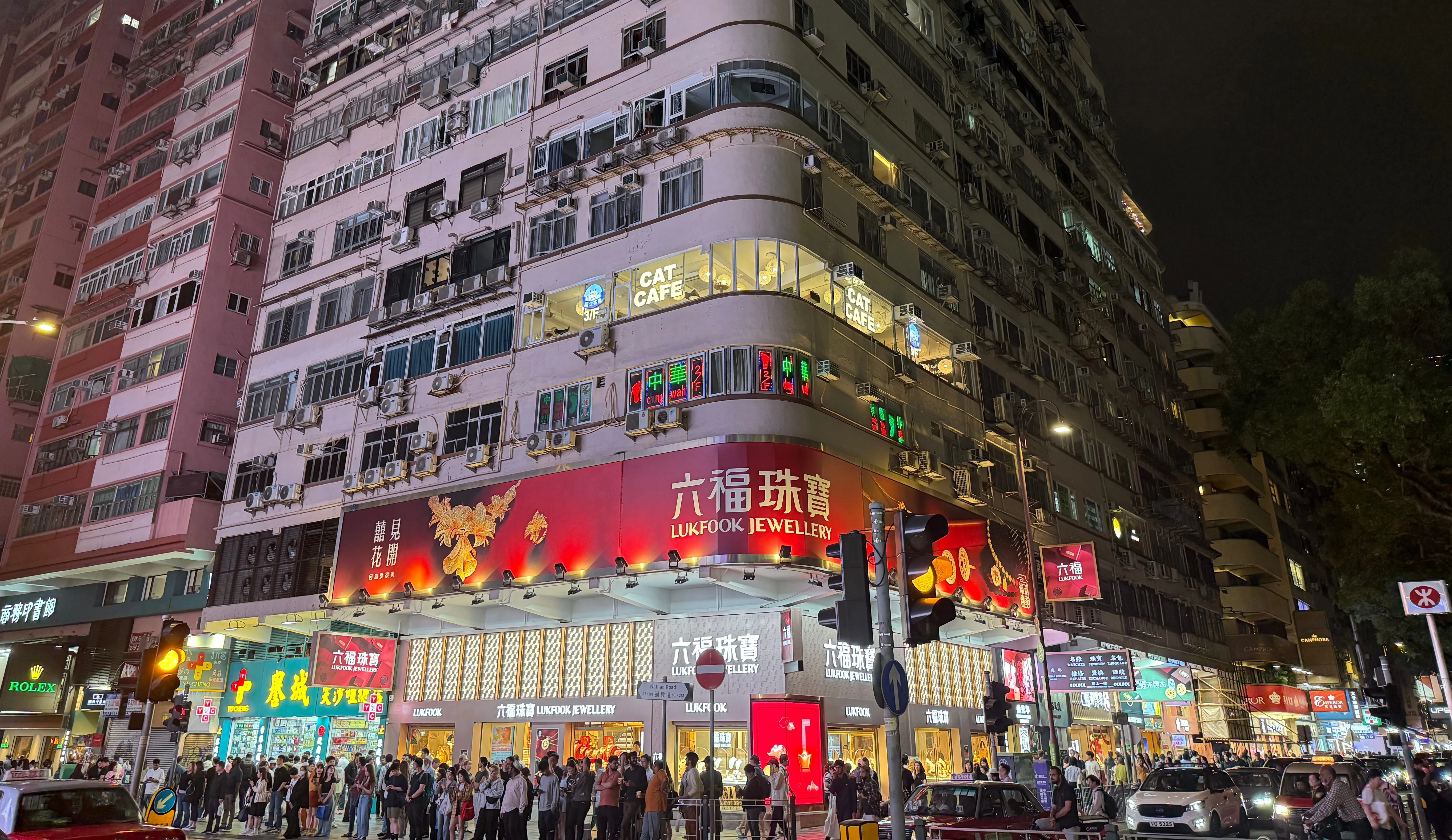
The first thing I noticed upon landing in Hong Kong was the sheer abundance of “sound and color.” Neon signs crowd every street, their dazzling fonts and hues are an assault on the senses, and the incessant beeping of escalators resonates throughout the city. Coming from Japan—where streets are comparatively quiet and orderly—the difference is striking. Hong Kong’s urban environment feels dynamic, vibrant, and almost overwhelming with its constant signals.
What also struck me was that day-to-day living in Hong Kong can be surprisingly expensive. Outside of local market alleys, the cost of a simple meal at a restaurant or a food court can easily surpass what you’d pay in Japan—sometimes double. Even well-known brand-name items or souvenirs, far from being bargains, often feel pricier than their Japanese counterparts. As a result, I found myself making fewer shopping purchases than I’d planned. Time and again, I caught myself thinking, “This price could buy me two meals in Japan.”
How does this translate when Hong Kong residents visit Japan? If I found Hong Kong “loud,” then Japan, by contrast, must seem remarkably “quiet, composed, and stable” to them. The meticulously clean streets, subtle city hues that sometimes appear nearly monochrome compared to the city’s cute animated mascots, and orderly culture of lining up—these present a charm completely unlike Hong Kong’s vibrant energy. What’s more, the prolonged slump in Japan’s domestic economy has led to a weak yen, making Japan feel even “cheaper” for foreign visitors. The ongoing depreciation of the yen underscores this price difference, making goods in Japan appear quite affordable.
Having experienced Hong Kong’s high cost of living, it’s no surprise that Hong Kong visitors often load up on items from Japanese drugstores and clothing shops. I once watched a Hong Kong friend pack her suitcase to the brim with things purchased in Japan, and I found myself wondering, “Is it really that much cheaper?” But after witnessing Hong Kong’s prices myself, her enthusiasm made perfect sense.
It’s not just Hong Kong: travelers from the UK and elsewhere also talk about how “cheap” Japan has become. While favorable exchange rates obviously play a big role, Japan’s longstanding reputation for “reasonable prices with high quality” is also a significant factor. On the plus side, the influx of foreign consumers brings life to Japan’s sluggish domestic market. Yet some worry that, in the long run, the weak yen could undermine the country’s fundamental economic strength.
Even so, there must be something compelling about Japan to foreign visitors—enough to keep them coming back in large numbers. In the case of Hong Kong, Japan offers a calm, well-organized environment that contrasts sharply with the city’s energetic street scenes, along with lower relative costs for goods and services.
In the end, the “noise and color” of Hong Kong—together with its high costs and wages—meets the “calmness and affordability” of Japan. Each side sees in the other something to admire, an entirely different way of life and culture, allowing new perspectives to emerge. Despite both being in Asia, Hong Kong and Japan differ greatly in how people live, the cultural soil they stand on, and their economic frameworks. This contrast makes travel even more appealing and ensures the comings and goings don’t let up.
No one can say for sure how long the weak yen will last. But it’s unlikely that visitors from Hong Kong—and around the world—will suddenly lose interest in the sense of freedom, joy of shopping, and cultural experiences found in Japan. Conversely, the vivid colors and bustling energy found on Hong Kong’s streets, impossible to replicate in Japan’s more subdued environment, remain a unique and valuable draw for Japanese travelers.
This exchange—discovering each other’s polar opposites, delighting in the differences, and feeling invigorated by the novelty—is precisely what makes cross-border travel so captivating. Over time, these ongoing visits will hopefully draw Japan and Hong Kong ever closer.
Wonsuh Song (Ph.D.)
Lecturer at Shumei University / NKNGO Forum Representative
https://geographersong.jp/about/










댓글 남기기