

By Wonsuh Song
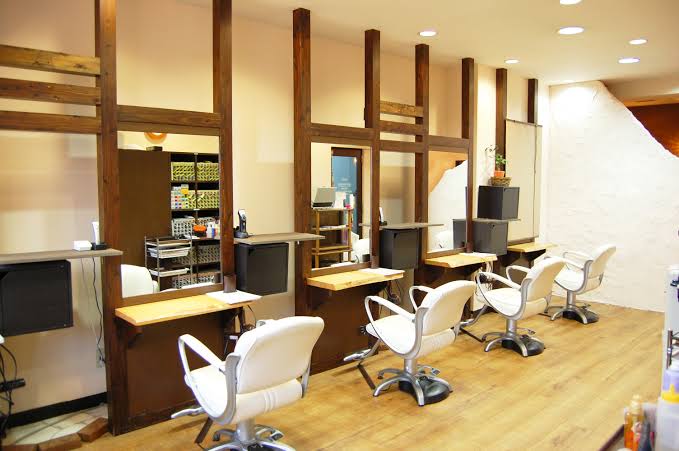
Japan’s beauty sector has never been bigger—or more crowded. The 2024 Eisei Gyōsei Hokokurei tallied 274,070 salons nationwide, up 4,181 on the year and the first time the industry has breached the 270-thousand mark. New openings reached 14,304, but 10,123 salons shut their doors in the same 12-month window, underscoring a churn rate that has hovered near five figures for a decade.
In such a saturated market, pay is unsurprisingly flat. According to the 2023 Basic Survey on Wage Structure, the average Japanese stylist earns ¥3.80 million a year—barely US $26 k. Twenty-something stylists make even less, averaging ¥2.78 million.
Across the Pacific, the arithmetic flips. Indeed’s July 2025 scan of 24,000 U.S. job posts puts the average stylist wage at $24.34 an hour—roughly US $48,700 a year for full-time work, before tips that can add 15–25 percent. Elite urban salons advertise $30–40-plus hourly rates, and mobile on-demand apps quote north of $90.
Yet very few Japanese professionals take the plunge. Including emigrants’ descendants (Nikkei), only 3.8 million people of Japanese heritage live outside Japan—about 3 percent of the home population of 123 million. By contrast, 7.08 million Koreans (13.7 percent of Korea’s population) are already abroad, a diaspora more than twice as large in raw numbers and over four times larger in population share.
Licensing hurdles abroad are real but manageable. Most U.S. states require 1,000–1,600 clock-hours of cosmetology school; hours completed in Japan can often be credited, and states such as New York and California accept 1,000-hour fast tracks plus an exam. Exchange routes exist as well: the BridgeUSA J-1 “Trainee/Intern” visa grants 12–18 months of on-the-floor experience if you graduated within the past year, while experienced artists may qualify for the O-1 visa on a record of “extraordinary ability.”
Market demand is anything but hypothetical. Japanese salons in New York run perpetual waiting lists and advertise visa sponsorships for Japanese stylists on their websites and Instagram feeds. Clients pay US$110–150 for a precision cut that costs ¥6,000 in Tokyo and rave about the head-spa scalp massage they can’t find elsewhere.
What does it take to capture that premium? Roughly 300 English words—layers vs. blunt, roots vs. ends, fringe vs. bangs—cover 90 percent of in-chair conversation. A smartphone-shot look-book on Instagram or TikTok does the rest; hashtags like #JapaneseCut and #HeadSpa already pull millions of views. For credentials, attach your shikakucertificate, hours transcript (with an official English translation), and a concise résumé. Sound intimidating? Compare that effort with five more years of 40-hour weeks at ¥220,000 a month.
Beauty schools and trade associations can accelerate the shift. Adding TOEIC-prep electives, inviting overseas recruiters to campus fairs, or setting up one-year “Global Cosmetology” exchange tracks would align supply with international demand. The government, for its part, could fold stylists into its existing Cool Japan subsidy stream, recognizing that “service exports” are not limited to anime and sushi.
Japan’s salon count has crossed its Rubicon. The scissors that honed their edge in Aoyama and Omotesandō now need a larger canvas. When Japanese stylists step onto global floors, they export not just technique but omotenashi itself—turning a haircut into an ambassadorial encounter. The world is waiting; all that separates Ueno from Fifth Avenue is a boarding pass and the courage to click “book.”
Wonsuh Song (Ph.D.)
Full-time Lecturer, Shumei University / NKNGO Forum Representative














댓글 남기기