

by Wonsuh Song
During my recent trip to Washington, D.C., I had an experience that truly left an impression. I reconnected with a college friend who was once deeply involved in anti-U.S. demonstrations. Ironically, out of all of us, she was the only one who ended up immigrating to the U.S., where she now runs a halal food restaurant. What’s surprising is that she embraced and learned Halal food in a new country, even though Halal food was virtually unknown in Korea.
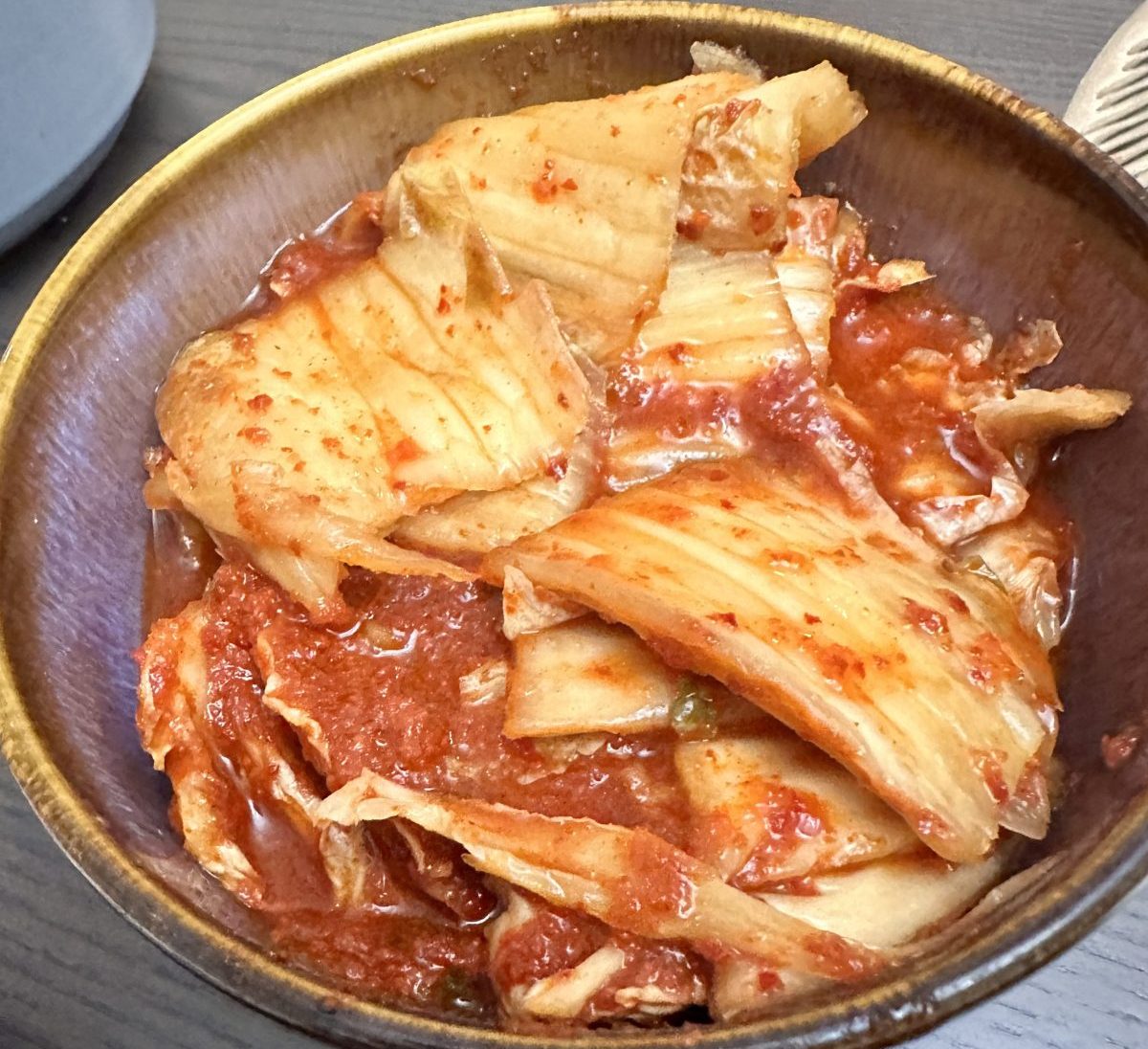
But the biggest surprise came when I visited her home. My friend had prepared Korean dishes to welcome me, including a remarkably delicious kimchi. I assumed she must have brought it from Korea, but to my astonishment, it was made by a Honduran employee working at her restaurant—using only ingredients sourced in the U.S. It tasted so good that I took some back to Japan, packed carefully by my friend. The idea of savoring kimchi made in the U.S. by a Honduran chef felt like a unique and refreshing experience.
Reflecting on this, I realized just how much the world has changed. My friend, who had little exposure to halal food in Korea, is now successfully running a halal food restaurant in the U.S., while their Honduran employee, who likely never had kimchi back home, is now making it with finesse. In a corner of the restaurant, they were also selling kimbap, another Korean favorite, and the Honduran employee was rolling it with the skill of a seasoned chef. It’s incredible to see these once-separate cultures and cuisines blend together so seamlessly.
This trend isn’t unique to the U.S. In Tokyo’s Koreatown, for example, many vendors of Korean street foods like hotteok and tteokbokki are from Nepal or India. Finding Korean staff for these jobs has become increasingly difficult, and now it’s often people of various nationalities who bring these dishes to the public. In Korean restaurants, too, you often see people with different backgrounds preparing and serving traditional Korean foods.
These encounters remind me of the diverse and borderless world we now live in, where cultural and culinary boundaries are constantly dissolving. A Honduran chef making kimchi in the U.S., which I then bring back to Japan—this experience was something I could never have imagined. Moments like this remind us that our thinking needs to evolve as well. No longer can we see food or cultural practices as belonging strictly to one nation or group; our world has become a melting pot where such distinctions blur.
As we face more of these unexpected, interconnected experiences, the ability to adopt a flexible mindset will be essential. Not only for personal growth but also for fostering a more harmonious global society, we must embrace and adapt to this ever-evolving landscape. The changes ahead may be difficult to predict, but by approaching them with openness, we can be better prepared for a world that is more blended and diverse than ever.
Wonsuh Song (Ph.D.)
Full-time Lecturer, Faculty of School Teacher Education, Shumei University
Adjunct Lecturer, Faculty of Education, Waseda University
Visiting Researcher, Center for Spatial Information Science, University of Tokyo










댓글 남기기