

By Wonsuh Song
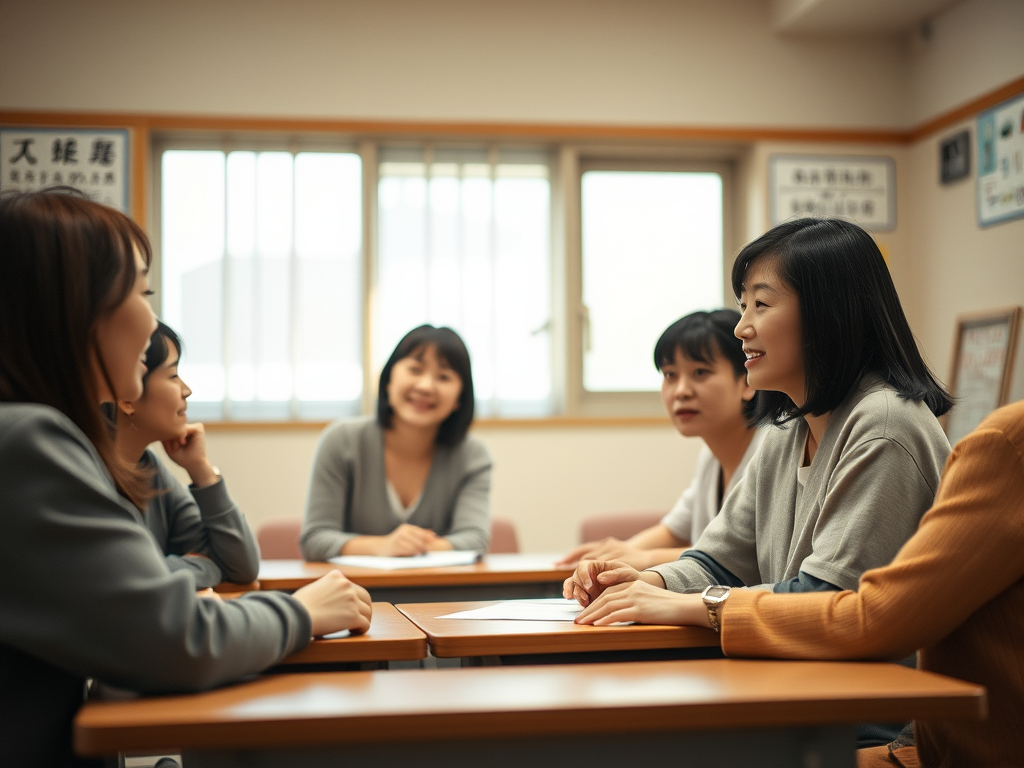
I have now lived in Japan for 24 years. With both of my children having entered junior high school, I suddenly find myself squarely in the middle of Japanese society as the parent of two adolescents. Through involvement in the school’s parent community—a world distinctly different from my workplace or local neighborhood groups—I have begun to see Japan from an entirely new angle.
What stands out to me these days is the “parents’ group chat.” In most Japanese junior high schools, homeroom teachers do not share their personal contact information or social media accounts with parents. As a result, these parent-only chat groups arise spontaneously. All parents participate, and a “leader mom” takes charge of organizing lunch gatherings and post-meeting social events.
Recently, a “self-introduction relay” started in our group, perfectly illustrating a quintessentially “Japanese” social dynamic. Reviewing the introductions posted so far, self-deprecating humor seems to be the rule. Typical remarks include: “Every day is a battle between my teenage kid and my menopausal self,” “My eyesight is so bad these days that I can hardly read this chat.” In other words, there is an unspoken understanding that one must not boast or draw too much attention to oneself. Instead, you lightly poke fun at your own life, helping everyone share a laugh. That seems to be the secret that keeps Japanese middle school parent communities running smoothly.
Such an “inconspicuous” mindset is evident not only in the group chat but also at in-person gatherings. For instance, even if you can afford luxury items, bringing a designer handbag to a school function or parent meeting is discouraged. Instead, parents prepare a plain black bag, free of any conspicuous logos. The reason is simple: no one wants to appear showy or ostentatious. Stories occasionally surface on TV about a politician’s spouse who shows up at an official event carrying a modest, unmarked bag, and this, too, fits into the same logic: it subtly conveys that “our household’s situation is no different from anyone else’s,” sending the message: “I’m not trying to stand out.”
In this atmosphere, I find myself fretting over what to say when it’s my turn to introduce myself. I’m a foreign national, and on top of that, I have a different last name than my children, making me more noticeable. Part of me wonders if I could be a little bolder because I’m not Japanese. But given that I’m part of the “Japanese junior high school parent” group—and mindful that my children have to navigate this environment—I realize I should avoid rocking the boat. It seems best to steer clear of excessive self-promotion or bragging, and simply wrap up my introduction with something like, “I’m a busy parent muddling through the teenage years along with everyone else.”
In truth, it would be simplistic to dismiss all of this as mere “keeping up appearances.” It also reflects a culture where people try to minimize conflicts and show consideration for one another. There’s an implied sense of shared hardship: “We’re all in this together,” leading to a collective empathy built through small confessions of daily struggles. In this way, self-deprecating humor becomes the tie that binds.
Indeed, one can see all of Japan reflected in this seemingly small community of parents. A cultural emphasis on not pushing oneself too far into the limelight, an ethos of building solidarity through group activities, and the meticulous effort to maintain harmonious relationships—these qualities underpin the Japanese ideal of “harmony.” One could argue that this ideal takes shape first and foremost in forums like the school parents’ group.
As for me, I am still pondering “What’s the best way to introduce myself?” Perhaps I will settle on a lighthearted confession: “I spend most of my days clashing with my two middle school kids, but in the end, we rely on each other to get by.” By sharing a laugh with my fellow parents, I hope we can bond in our own way, promising to “get through this challenging time together.”
This, I believe, is the unique social order shaped by parents raising children in Japan—and an unexpected insight into Japanese society that I have gained after all these years.
Wonsuh Song (Ph.D.)
Full-time Lecturer, Shumei University / NKNGO Forum Representative








댓글 남기기